Wednesday, September 22, 2021

ODETTE STORY by MLBB


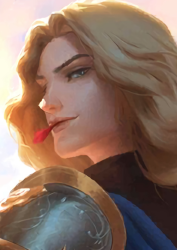
odette fanart by: chadarty

Full Name: Odette, Princess of Swan                               Alias: Swan Princess

Faction:      Moniyan Empire (as constituent state)              Place: Swan Castle, Moniyan Empire Azure Lake

Power:        Swan Magic, Healing Spells, Musical Magic      Weapon: Scepter and Sword

Gander:      Female                                                       Race: Human

Affiliation: House Alvin                                             Relative(s): Prince Alvin II (father) Lancelot (partner)


Background

The Swan Castle located near the Azure Lake was the fief of Prince Alvin of the Moniyan Empire. The first liege of this land—Prince Alvin I was a desperately romantic crown prince. To marry a woman of humble birth, he resigned and gave up the throne to his brother—Sirius IV, leaving the Lumina City and settling down in the countryside now known as the Swan Castle.

House Alvin and their romanticism were then passed down through generations. Prince Alvin II also assumed his royal title at a young age—his brother and the eldest son of Prince Alvin I focused on religious endeavors and later became the archbishop of the Church of Light. Princess Odette was the [third-generation] scion of the family, and this elegant, lovable Swan Princess's love story perfectly attested to the romantic nature of House Alvin's descendants.

Owning right to the throne, Prince Alvin and his family understood the tricky situation they were in and rarely got involved in domestic politics or had much contact with the other nobles. Since childhood, Odette had been leading a peaceful, tranquil life within the Swan Castle, without ever setting foot out of their territory. But the seemingly quiet girl had been filled with curiosity and longing for the outside world.

By the time she reached adolescence, she worked up the courage to conceal herself under a mantle and sneak out to visit the market nearby without her parents' permission. The naive princess once tried to pay for bread with a whole bag of gold coins and offered a beggar all the jewelry she had on her after hearing his routine tear-jerking story, but these little delinquencies just outside her home were enough for Odette to feel adventurous.

But eventually her adventures brought her trouble—this clueless young princess only learned what powerless felt like when she was harassed by a few thugs in a tavern... Thankfully in a drunken stupor, Lancelot.png Lancelot drew his sword and drove those men away. But Odette felt at a loss of what to do seeing her rescuer get injured and fall on the ground, her eyes brimming with tears. So, she made a decision that went against her family rules—to bring the unconscious Lancelot back to the Swan Castle.
In a room atop their castle tower, Odette dressed Lancelot's wound and casted her family's healing spell with a scepter to treat him with the help of a young maid. She spent the whole day and night watching over Lancelot who was on the verge of death, and only let out a sigh of relief and smiled wearily when the man finally opened his eyes again… For the following days, Odette hid Lancelot inside the Swan Castle so that he could recover, and she would bring food to him every day with the maid and listen to the interesting romantic knight of Castle Gorge as he played the harp and sang songs about the adventures he'd had throughout the land. These songs were fun melodies Odette had never heard as she'd only known royal music, and the lyrics once again piqued her strong curiosity and yearning for the outside world.

fanart by aljane

Odette's meetings with Lancelot became the greatest fun of her days. As she gradually opened up to this new friend of hers, she would also tell him about her little adventures of rebellious delinquencies and even learned from him a few sword fighting techniques for self defense.

As they bounded over time, Lancelot slowly became reticent and withdrawn. He no longer played those funny songs in praise of the hero Lancelot, and yet often caroled about the love story between a knight and a young maiden, exalting a kind and beautiful princess.

The innocent Odette didn't understand the reason behind his change, until the sneaky maid suddenly asked her in a whisper, "Who do you think Lancelot is playing these songs to, Your Grace?"

The maid's words awoke the blind princess. Odette finally came to realize that someone was subtly courting her!

It was once again the mischievous young maid persuading Odette to not run away or ignore his courtship that the princess had the courage to face Lancelot's feelings. But she still hadn't worked out whether she was also in love with him.

As Lancelot's injury healed with each day, Odette knew that the day of his departure was nearing. Her spirits sank low, and one day a letter delivered by his father disturbed her mind even more—"Duke Baroque was proposing to me on behalf of his son? What an annoying suitor!"

But Odette suddenly came to a realization: wasn't the "romantic knight of Castle Gorge" from House Baroque's fief? So, the duke's son must be...

Despite her heart beating out of her chest, Odette had to feign calmness before her parents. But when she returned to her bedchamber, she couldn't help but giggle to herself and even danced cheerfully with the maid. But unsure how to face Lancelot, Odette realized that she couldn't bring herself to see him now.

But unexpectedly, Lancelot left a letter and went away without a farewell a few days later. Feeling dejected, Odette finally realized how much she'd adored him…

Until one night, having made up her mind, Odette wrote a letter to her parents before quietly leaving the Swan Castle.

She would follow the traces Lancelot left behind and search for the love of her life…

source: https://mobile-legends.fandom.com/wiki/Odette/Story


Professional Gamers Make Money


As recently as a decade ago, earning a living playing videos games was considered nothing more than a pipe dream – with limited monetization avenues not just for players, but for game developers and publishers as well. The esports industry itself was still in its infancy, and competitive gaming was little known outside a core group of highly engaged players and fans.

However, in the last ten years, esports has exploded in popularity, as evidenced by Riot Games’ League of Legends Championship Series establishing itself as the third most popular sport in the United States amongst 18-34 year olds, only behind the National Football League and the National Basketball Association. In addition to sanctioned, competitive play, there has been a dramatic uptick in the number of individuals who have established careers live-streaming video game content on popular sites such as Twitch and YouTube. In addition, 2019’s Fortnite World Cup showed an entire generation (and perhaps more importantly, their parents) that there is serious money in competitive video gaming when then 16 year-old Kyle ‘Bugha’ Giersdorf won $3 million in front of a packed Arthur Ash Stadium.

As gaming has grown its footprint in the zeitgeist, so too have the opportunities to generate a successful career from what has historically been viewed by many as nothing more than a waste of time.

With the esports industry growing at significant and sustained levels year-over-year (with the market having broken the $1 billion barrier in 2019), the existence of full-time competitive esports athletes has exploded – especially as increased competition has exacerbated the need for around the clock training and management of top talent.

In general, there are five primary sources of income for professional gamers: prize money, salaries, sponsorships, live-streaming, and video-on-demand content.

Prize Money

Prize money is the oldest and simplest form of making money as a professional gamer. If a player places high enough in a tournament, they receive a portion of the tournament’s prize pool – similar to conventional sports such as golf or tennis. Prize pools tend to be more prevalent in single-player focused titles, however, team competitions in major tournaments (such as Dota 2’s The International) often share prize pools with the players who competed on behalf of the organization.

While prize pools have existed in competitive gaming since the early 80s, it has seen its importance fall fairly precipitously in modern competitive gaming given concerns with the viability of such a mechanism as more and more investors in the space push for longer-term and more stable vehicles to generate returns for their investments. After all, if an esports player or organization fails to do well at a given tournament, they may end up losing money by attending. Most major tournaments (as well as many smaller ones) require that participants travel to a physical venue that may be some distance away from where the team or the competitors are based. Once travel, lodging, entry fees, and meal expenses are incurred, teams or individuals that fail to place well can often be left off worse financially than if they had simply stayed at home.

Until the early 2010s, it was a common occurrence for esports professionals to work a full-time job during the week, while competing in events on the weekends. Money was scarce in the early days of esports and living off non-guaranteed tournament winnings was not a viable solution for most. Sponsors and investors were still afraid to invest substantial resources into esports, as they viewed gaming as a pastime for kids and teenagers, not an industry that has now grown to be larger than the film and music industries combined.

Such thinking began to change in 2010. As more and more money began flowing into the competitive gaming scene, professional teams began forming. Fed up with the instability they often faced as smaller scale professional gamers, esports players began pursuing opportunities that provided more security and less reliance on prize money, something that contracts with professional teams would ultimately offer in the form of salaries.

Salaries

Some of the earliest formed esports teams include Cloud9, Team SoloMid (TSM), and Team Liquid. These organizations spearheaded many of the trends that have ultimately led to an increased quality of life for their players, the most important of which is a guaranteed salary.

Several years later, esports leagues such as the Overwatch League, would expand on the benefits available to those who compete at the sports highest level. Overwatch’s parent organization, Activision-Blizzard, has mandated that all players must receive health benefits and access to a retirement plan on top of a $50k minimum salary, a total compensation package that is in line with the median in the US.

For professional gamers that have historically made a meager living off of prize money alone, having a guaranteed living wage was a huge burden lifted. Competitive salaries meant that players could now focus on doing well in tournaments without the added stress of potentially losing money. Prize money was now an extra bonus if a team did well, rather than a competitor’s sole source of income.

Nowadays, many teams offer even more guaranteed benefits to attract top talent in an increasingly competitive labor market. Million-dollar team homes with professional nutritionists and chefs can be found throughout Los Angeles, Berlin, and other esports hubs, as teams look to provide their players with every competitive edge possible in an effort to boost both performance and morale. The next three ways professional gamers can make money – sponsorships, Twitch, and YouTube – applies to not only esports competitors, but also to individual content creators that focus on holistic entertainment instead of pure performance.

Sponsors

Sponsorships are another viable, high-paying source of income for both professional players and streamers. As esports players and streamers became increasingly visible to the broader public and started attracting sizable fanbases, companies not endemic to video games or esports began sponsoring these individuals, as well as teams and leagues, in increasing numbers.

Beverage brands such as Red Bull, Monster Energy, and Mountain Dew, and computer companies such as Intel and AMD, all have sponsorships with high-profile players and teams. In turn, the organizations and players endorse their sponsor’s products on their Twitch streams and social media, use their products, and feature in commercials.

Food, beverage, and computer component and peripheral companies were among the first entities to sponsor gamers given the deep association and direct link with the consumption of video games and related content. These sponsors are typically viewed as natively endemic to the space and have had years to realize the returns on their initial investments in the space.

Perhaps most compelling for the incomes of future professional gamers is the proliferation of non-endemic sponsors in the esports and gaming industries. Mercedes-Benz and Gillette are two high-profile brands previously not affiliated with gaming that have now jumped onto the esports train with large investments –Mercedes-Benz has partnered with the ESL and Gilette has joined forces with Twitch via the Gilette Gaming Alliance.

Celebrities and investors have also entered the gaming industry in force in recent years. NBA legend and Charlotte Hornets owner Michael Jordan, rapper Drake, former Lakers player Rick Fox, and billionaire and Dallas Mavericks owner Mark Cuban are some notable names that have either invested directly into esports organizations, or are limited partners at venture capital funds that have made investments in the space.

With a sudden influx of capital into esports from brands, celebrities, and investors, professional players have seen the value of associated sponsorships climb alongside company valuations.

Twitch

Streaming is perhaps the most popular way for non-competitive gamers to make a living in the video game space While streaming has evolved to include in-real-life (IRL) activities like cooking, watching movies, or just chatting, gaming was undoubtedly the genesis of this rapidly growing industry, and still represents a significant portion of overall traffic on streaming sites.

Competitive esports athletes can also leverage streaming to expand on their earnings potential, with individuals on teams often streaming when their season is over or outside of team-mandated practice.

The most popular streaming platform, Twitch, dominates with approximately 72% of the market. YouTube Gaming has approximately 20% of the streaming marketplace, with Facebook Gaming (5%) and Mixer (3%) rounding out the remaining notable participants.

Since Twitch’s inception in 2011, it has established itself as the live streaming platform of choice for streamers. The primary mechanism by which streamers can earn money on Twitch is by becoming a partner, which allows channels to charge subscribers a fee for access to content. While not a necessity to access standard streaming content, subscriptions allow subscribers to reward their favorite content creators, and can grant access to custom emotes, among other benefits. Twitch subscriptions are broken out into three tiers:

  • Tier 1: $4.99 per month
  • Tier 2: $9.99 per month
  • Tier 3: $24.99 per month

New Twitch streamers typically share the subscription fee with Twitch (who is owned by Amazon) under a 50/50 revenue share agreement. The most popular streamers on the network can often renegotiate their revenue share agreement to a more favorable 70/30 split in favor of the streamer. This is likely contributable to larger advertising revenue associated with greater CPMs. The potential for better pay outs serves as motivation for small and mid-sized streamers to produce high-quality streams that will draw more eyeballs.

As streamers grow their audience procure ever more subscribers, it becomes increasingly apparent how the most popular streamers can make a living off subscriptions alone. A streamer with 2,000 Tier 1 subscribers alone can take home roughly $5,000 a month (2,000 * $2.50). Meanwhile, a popular streamer with twice the subscriber base who has renegotiated their rates can earn $14,000 a month (4,000 * $3.50). In addition, if a streamer has a significant number of Tier 2 and Tier 3 subscribers, their monthly earnings can be even greater.

Each month, subscribers need to renew their monthly subscription for streamers to continue being paid. Subscription numbers fluctuate up-and-down depending on how loyal a streamer’s audience is. This dynamic incentivizes streamers to stream often, engage with their fans, and encourage their audience to re-subscribe.

Donations are another way individuals can make money from streaming platforms. Viewers have the option of donating money or, in the case of Twitch, Bits – a bit is valued at 100 bits to $1 – to the streamer. While some streamers are reported to make several thousands of dollars per month from donations alone, the vast majority of streamers make far less.

Relying on donations as a sole source of income is undoubtedly risky. Unlike subscribers, which hover around an expected range each month, donations are random and can coincide with seemingly random events. One month may see a larger influx of donations, while another month may have little to no donations.

Displaying advertisements on their channels is another way streamers can make money on Twitch. However, low CPMs for all but the largest of channels results in potential income of only a few cents per advertisement run. In addition, if streamers try to run ads too frequently to counteract the low expected earnings per each unique ad, they risk alienating their user base.

YouTube

Posting VOD content to YouTube is another way many professional gamers monetize the content that they have created. Many professional gamers have editors that reduce down a full, eight or ten hour streaming session into a ten to twenty minute VOD for distribution on YouTube, providing an opportunity for fans who may not be able to watch content in real-time (or for a full session) to still consume content from their favorite creators.

Similar to Twitch, YouTube also has a pay subscription, called a “channel membership”; however, there is only one tier at a cost of $4.99 a month. YouTube also provides options to accept donations and run ads on the platform, so as long as certain criteria for monetization are met. The Google-owned platform also collaborates with the merchandise brand Teespring, which allows creators to sell their own merchandise directly through the platform. As a result of YouTube’s more stringent monetization criteria, a number of content creators have turned to Patreon as an alternative to direct content distribution via YouTube itself – instead offering access to private channels as rewards for monthly subscriptions processed via Patreon.


Devil May Cry 5 Repack Free Download

  Devil May Cry 5 Sinopsis Cerita Kisah ini bermula sejak dahulu kala, perang antara dunia bawah dan dunia manusia sedang berlangsung. Perte...